
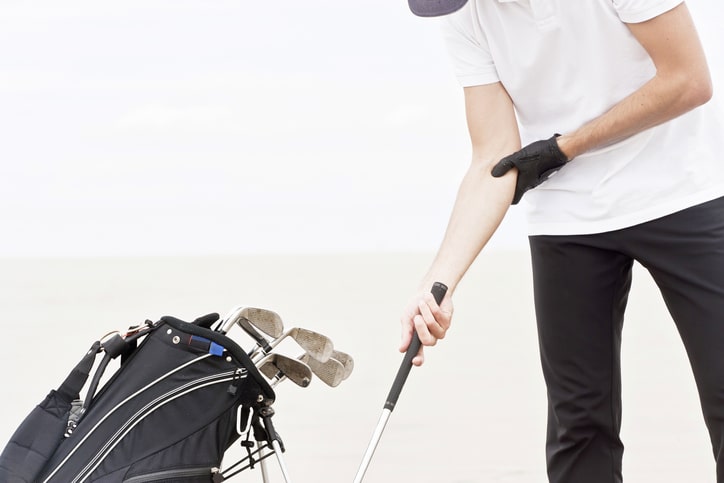
Golfer’s Elbow Causes, Symptoms & Treatment
Golfer’s elbow can make even simple movements uncomfortable from shaking hands and lifting a bag to swinging a golf club or typing at work. While it is common among golfers, you don’t have to be a weekend duffer to develop it – this painful overuse injury affects many people who have never stepped onto a course.
At OrthoBethesda, we help patients in Bethesda, Maryland and surrounding communities find relief with personalized treatment plans designed to reduce pain, restore strength, and help them return to the activities they enjoy.
If you are dealing with persistent inner elbow pain, understanding the signs of golfer’s elbow and knowing when to seek treatment can help you recover sooner.
Quick Summary
Golfer’s elbow, or medial epicondylitis, causes pain on the inside of the elbow from repetitive gripping, lifting, or wrist movement. It is common in golfers, but also affects people who lift weights, use tools, play racket sports, or perform repetitive tasks at work. Early treatment may include rest, ice, bracing, physical therapy, and activity modification. If elbow pain is not improving, OrthoBethesda offers expert golfer’s elbow treatment in Bethesda, MD.
What Is Golfer’s Elbow?
Golfer’s elbow is a condition that affects the tendons on the inside of the elbow. It develops when repeated stress or overuse causes tiny tears in the tendon, leading to pain, inflammation, and weakness. Although golfer’s elbow is often compared to tennis elbow, the two conditions affect different parts of the joint. Golfer’s elbow causes pain on the inside of the elbow, while tennis elbow typically affects the outside.
This condition is most often linked to repetitive motions involving the wrist and forearm. Golfers can develop it from repeated swinging, but it is also common among people who play racket sports, throw a ball, lift weights, use hand tools, or perform repetitive work with the hands and wrists.
Common Symptoms of Golfer’s Elbow
Golfer’s elbow symptoms can develop gradually or come on after repeated strain. Common signs include:
- Pain or tenderness on the inside of the elbow
- Stiffness in the elbow or forearm
- Weak grip strength
- Pain when bending the wrist or making a fist
- Discomfort that may travel from the elbow into the forearm or wrist
- Pain during golf, lifting, throwing, or repetitive hand movements
For some patients, symptoms are mild at first and only show up during activity. For others, pain may begin to interfere with work, exercise, and everyday tasks.
What Causes Golfer’s Elbow?
Forceful motions using the fingers and wrist can lead to golfer’s elbow. Sufferers often repeat movements such as hitting or throwing without warming up properly. Some common causes of golfer’s elbow, in addition to playing golf, include the following:
- Playing racket sports such as tennis may lead to injury. Applying a lot of topspin to the ball or using a racket that’s too small for you can increase your pain.
- Playing throwing sports such as baseball or softball can also hurt your arm.
- Lifting weights without proper technique, such as curling your wrists when you work on your biceps, can cause golfer’s elbow.
- Working in professions such as carpentry, plumbing and construction can also hurt your arm.
You may be at greater risk of developing golfer’s elbow if you smoke, are over 40 years old or spend more than two hours a day performing a repetitive activity.
How Is Golfer’s Elbow Diagnosed?
A diagnosis usually starts with a physical exam and a discussion of your symptoms, activities, and medical history. Your orthopedic specialist may check for tenderness on the inside of the elbow, pain with certain wrist movements, and signs of weakness or limited range of motion.
In some cases, imaging may be recommended to rule out other issues. X-rays can help exclude fractures or arthritis, while an MRI may be used if there is concern for more significant tendon damage or another condition affecting the elbow. At OrthoBethesda, our team carefully evaluates elbow pain to determine whether golfer’s elbow is the cause and to guide the right treatment plan.
How To Treat Golfer’s Elbow
Many cases of golfer’s elbow improve with non-surgical treatment, especially when the condition is addressed early. Treatment focuses on reducing stress on the tendon, calming inflammation, and restoring strength and function.
You can also use at-home methods to seek relief. Try the following:
- Apply Ice: Put ice on your elbow for 15 to 20 minutes several times a day. You should put a towel around the ice pack so your skin doesn’t get damaged. Try using the ice to massage the inner elbow for a few minutes during each application.
- Stretch the arm: Ask your doctor for stretching exercises that can also strengthen your forearm. Loading the tendon can be the best way to ease the pain.
- Buy a brace: Wear a counterforce brace on the arm to decrease muscle and tendon strain.
What Can You Do to Prevent Golfer’s Elbow?
While not every case can be prevented, a few smart habits can lower your risk.
Stretch
Before you work on strengthening your arms, it’s important to stretch. Stretching helps get your blood flowing and raises your muscle temperature, allowing more flexibility during your workout. Otherwise, you risk injuring yourself instead of building your strength. If you’re already injured, you can hurt yourself even further. We recommend trying basic hand and wrist stretches before moving onto strengthening exercises, such as:
- Repeatedly making a fist.
- Opening and closing your fingers, or abduction and adduction of your fingers.
- Wrist flexions and extensions, using as much range of motion as possible.
Strengthen
Strengthening the muscles in your arms, wrists and hands is the best thing you can do to prevent a case of golfer’s elbow in the future. As with any part of your body, the more you use your forearms and help them build muscle, the more you’ll be able to do on a daily basis without risk of injury. These exercises are some of the best to help you gain strength in your forearms, wrists, hands and fingers:
- Lateral wrist extensions.
- Seated dumbbell wrist curls and reverse wrist curls.
- Finger curls.
For these exercises, you’ll need a dumbbell. While the weight of the dumbbell depends on your body and strength level, it should generally be between five and 20 pounds.
Stop
Finally, if you start to experience pain while exercising, stop! Take time to let yourself rest and recover. If you must continue with your exercises, try to slow down or find an easier variation that doesn’t cause you pain.
How Long Does Golfer’s Elbow Take to Heal?
It takes about three to six months to heal golfer’s elbow through noninvasive methods. Not everyone sees results from this approach, however. If you engage in exercises and other therapy and don’t see a difference, OrthoBethesda can help. Contact us to learn more or set up an appointment.
When Should You See A Doctor?
You should schedule an evaluation with an orthopedic elbow specialist if:
- Elbow pain lasts more than a few weeks
- Pain keeps returning when you golf, lift, or work
- You notice weakness in your grip or forearm
- Symptoms interfere with sleep, work, exercise, or everyday tasks
- Rest and home treatment are not helping
Persistent pain on the inside of the elbow is not something you have to push through. Early treatment can help prevent symptoms from becoming more difficult to manage.
Golfer’s Elbow Treatment in Bethesda, Maryland
If you are dealing with inner elbow pain, weakness, or repetitive strain symptoms, the team at OrthoBethesda is here to help. We provide expert evaluation and treatment for golfer’s elbow in Bethesda, MD, with care tailored to your symptoms, lifestyle, and goals.
Whether your pain started on the golf course, in the gym, at work, or during everyday activity, getting the right diagnosis is the first step toward relief.